Despre Jim Seida pe site-ul Centrului pentru Jurnalism Independent
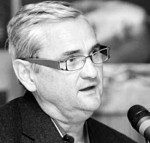
Jim Seida is one of the original multimedia journalists. Fourteen years ago, he helped create multimedia storytelling for an online audience as one of the core group of multimedia producers hired by Brian Storm during his tenure at msnbc.com.
Jim continues his work as one of the nation’s top multimedia reporters, using video, still pictures, audio and new technologies such as HD View and Photosynth to tell stories ranging from in-depth personal stories about race relations to breaking natural-disaster reporting following Hurricane Katrina.
Jim is often called upon to share his knowledge and experience at photojournalism and multimedia conferences worldwide. He is the premier instructor for teaching documentary audio reporting skills to photojournalists. In recent years, he’s lectured and coached at Eddie Adams Workshop, NPPA’s Multimedia Immersion and boot camps at University of North Carolina (Chapel Hill) and University of Miami (Florida).
Jim’s original multimedia reporting has been recognized by the Online News Association, National Press Photographers Association and Pictures of the Year International.
Cateva materiale multimedia ale lui Jim Seida:
Not participating in recession, Made in USA Multiracial in America











Do you think that the multimedia product should be available only with a fee?
"And with iPods and iPads and Xboxes and PlayStations — none of which I know how to work — information becomes a distraction, a diversion, a form of entertainment, rather than a tool of empowerment, rather than the means of emancipation. So all of this is not only putting pressure on you; it's putting new pressure on our country and on our democracy."
Thanks for taking the time to chat! Much appreciated!
They don't show us anything we can't get somewhere else; they simply repackage already existing content. A journalist's job is to take a fresh look at a story, a subject, or a sporting event and tell that story in a way that's unique to him or her and to share this new view with the news audience.
increasingly combine media, data and user engagement?
thank you
There are other stories that are quieter, and may be best told through a series of still images. Still other stories or information are best told graphically, where a user can interface with a graphical representation of the information and be given the ability to change parameters in the interactive/graphic to see how the information changes based upon the user-applied inputs.
The other reason news is presented in a variety of formats is simply because different people want to digest the news in different ways. Some people prefer to read a story while others prefer to watch a video, so why not give people a choice?
newsroom, driven by the opportunities and challenges introduced by the Internet. These roles within
journalism organizations continue to evolve worldwide, and now begin to include programming skills, not just to run
the business of news but to tell the stories in practicing the craft of journalism. This trend goes beyond
combining multiple forms of media: text, audio, video and graphics (known as convergence), and moves
into the realm of story creation using information gathering and technical presentation techniques.
Why is it so important to get this and how do you think newsroom of an online journalists can be made to understand the importance of their
involvment in creating online news packages that access databases, archival documents, photos, audio and
video and increasingly provides the opportunity for users to interact with and contribute to the
presentation?
thank you
It's important for journalists today to know what tools are available to them and to know how to use them. I'm not saying that everyone has to be good at everything - I believe people should play to their strengths. In other words, someone who is great at shooting video might not be great at writing the code necessary to build an interactive graphic.
But, managers and editors need to recognize how best to tell each story and to have a staff that's diverse enough to accomplish the task. Also, by revealing (and sometimes repackaging) the databases that are available online to our audience, we can empower them to go beyond our story and do some exploring, and learning, on their own.
methods?
2. 2. How important it is for a journalist to get the importance of a video material part of his story and what are the riscks if he's not getting that?
3. More important why do you think is a newsroom should promote the value added of its video products in storytelling?
thanks
3. If you ignore video and other forms of multimedia, you are ignoring some (now) basic forms of story telling that the internet news consumer is hungry for, and you risk losing your audience, and consequently, you risk losing advertising revenue.
objectivity, transparency, sharing of information and performance. By merging these cultures, what
emerges in terms of a hybrid dynamic? How do the editors, journalists, managers, their backgrounds and training, their processes
and the organizational structure affect the products they deliver?
WHat do you think, is print media going to die?
Thank you.
Thank you.
isn't there a problem about the respect that we show to our public? I wouldn't listen to a recording that has a lot of background noise and is almost "unhearable", just because the reporter was to lazy to use a microphone and prefered to record it with his telephone lying on the table 2 meter away from the subject. would you?
thank you.
thank you.
2. What are the best ingredients for making a great multimedia content for online? Please prioritise.
3. What are the best learning sources for creating quality online multimedia projects?
4. Some personal opinions about: Final Cut vs. Adobe Premiere / HD camcorders - Sony vs Canon / fluorescent lights - led panel lights or halogen lights / start-up vs. media holding
2. 1) A great story
2) The skill set and equipment to tell the story well and to tell it in the way that best serves the story.
3) All the elements that make a great multimedia piece: Rich, story-telling audio and images and information that is useful to the end user.
3. More and more universities are offering multimedia training as part of their journalism programs. For software training look at www.lynda.com; for audio training look at www.audio.msnbc.com; and for further training on multimedia gathering and software, look at http://www.mediastorm.com/submissions/index.htm.
4. Personal opinions - I edit primarily in Avid, but if I had to choose between FC and Premiere, I'd choose FC only because I've had more (and better) experience(s) with it. Sony vs. Canon - I'm shooting with the Canon 5D Mkll now, and while it has a ton of shortcomings, I think it's headed in the right direction, so I'll say Canon. Lights - LED panels absolutely rock. They're small, dimmable without any change in color temperature, and they don't get hot. I don't understand the last question. I'm sorry.